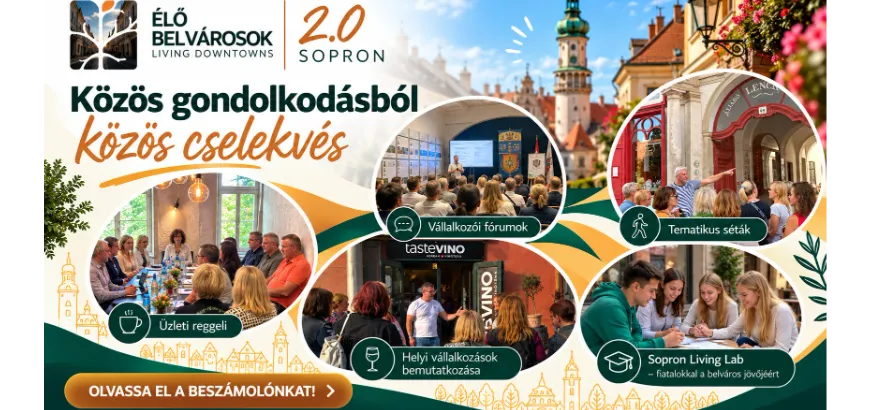
Common thinking leads to common action – this is how the Living Towns 2.0 project started in Sopron.
Two months, two business forums, four thematic walks, and a citywide professional meeting. In September and October, the collaboration of Living City Centers continued in Sopron through tangible programs. The focus of the joint work of the Sopron Chamber of Commerce and Industry and BUM was the unification of city center businesses, the revitalization of the local economy, and the dialogue about the city's future.
The Living City 2.0 builds on the results of the chamber program launched in spring. Following previous research, entrepreneur surveys, and professional forums, the emphasis is now on establishing practical collaborations. The program, which runs until April 2027, aims to ensure that local retailers, hospitality providers, service providers, and creative businesses not only operate alongside each other but can also collectively initiate, seek solutions, and shape the future of Sopron's city center.
Entrepreneurs articulated the most important common issues
On September 15, the first business breakfast was held at Hoffer Confectionery, centered around the question: what can entrepreneurs initiate together for Sopron's city center?
During the conversation, the problems faced by downtown businesses on a daily basis quickly came to light. Issues such as parking difficulties, a decline in customer traffic, event organization, and the lack of involvement of local businesses were discussed.
Participants, however, did not only list the difficulties. The possibility of parking discounts to encourage shopping, a joint event calendar, recommendations among businesses, as well as the organization of joint marketing campaigns and events also emerged.
One important outcome of the discussion was the shared intention to create a proposal package focusing on specific highlighted topics based on entrepreneurial inputs, which could then be discussed with city leadership.
Based on the BUM's experiences in Budapest, it is not necessarily large investments that are needed for lasting entrepreneurial collaborations to form. Sometimes, it is enough for entrepreneurs to get to know each other, coordinate their communication, organize joint programs, or recommend each other's services.
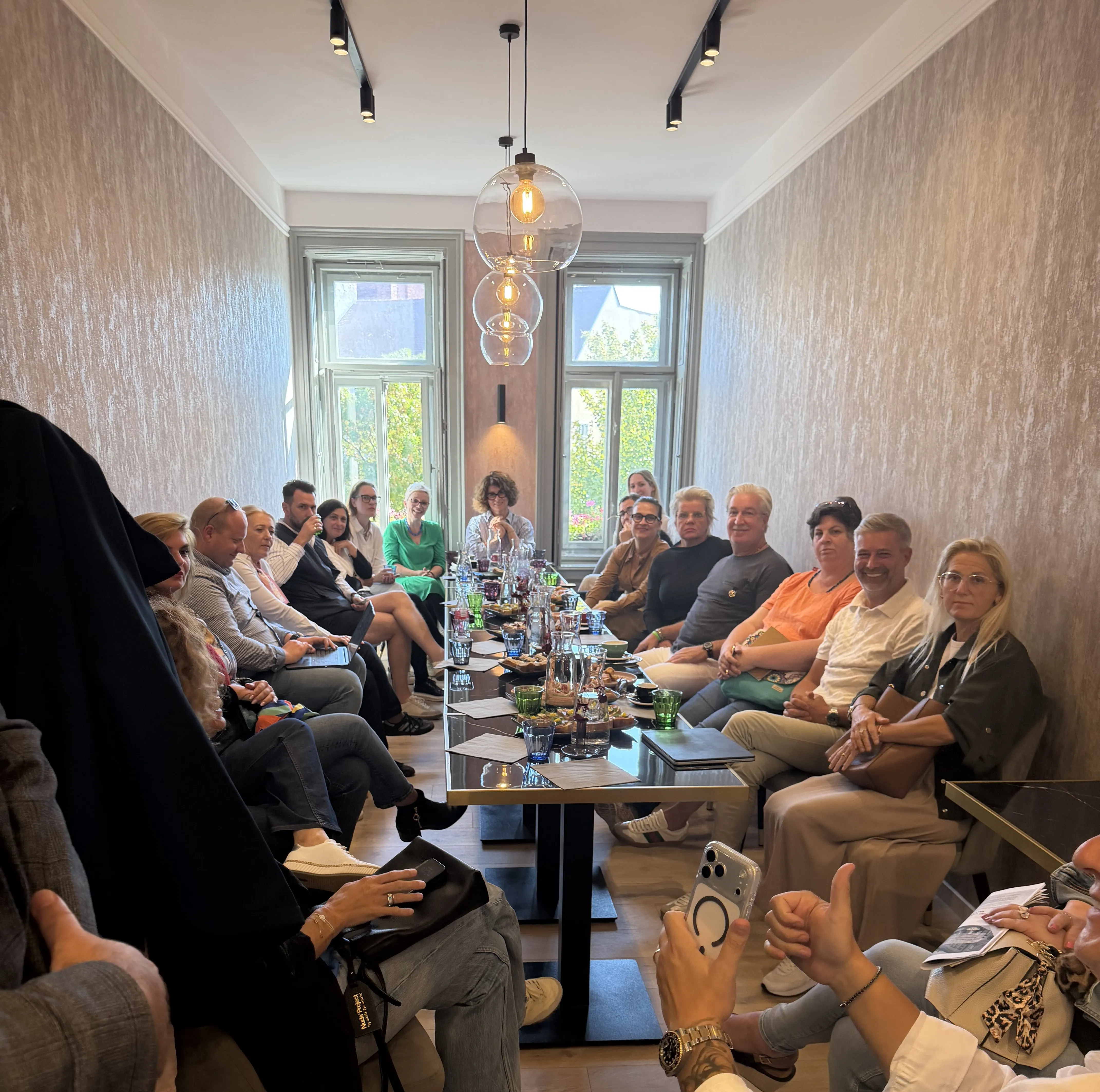
Photo: Sopron Chamber of Commerce and Industry
The dialogue continued with city leadership
The entrepreneurial forum on October 8 provided an opportunity to further reflect on the questions raised in September. Dr. Ciprián Farkas, the mayor of Sopron, also attended the meeting organized by the Sopron Chamber of Commerce and Industry.
Vilmos Horváth, the president of the chamber, emphasized that Sopron's special historic city center represents significant value, while the commercial offerings, the appearance of shops, and the customer experience must adapt to the changed consumer expectations.
During the forum, the dialogue was organized around five defining topics.
Parking and accessibility. Entrepreneurs advocated for more favorable parking options for customers and employees. Short-term parking discounts, improving the utilization of parking garages, and targeted subscription schemes were discussed. The municipality called attention to the available capacities and the coordination of the interests of different user groups. So far, no comprehensive agreement has been reached, but several proposals were deemed worthy of further examination.
Events and city life. Entrepreneurs expressed a desire for more smaller cultural and musical programs, even in the evening, which would also boost traffic to local hospitality venues. The city showed openness to specific program proposals, while the protection of the peace of downtown residents was also emphasized.
Tourism and city marketing. One important realization from the discussion was that the number of overnight stays does not necessarily reflect the state of downtown commerce. Special attention should be paid to encouraging the spending of day visitors, those coming for shopping purposes, and tourists in the city center. This may require more targeted communication, attractive programs, and linking local services.
Commercial offerings and customer experience. The development of shop portals, storefronts, opening hours, and local offerings also emerged as significant topics. A jointly advertised extended opening hours or commercial actions related to events could be initiatives in which entrepreneurs can actively participate.
New attractions and the 2027 anniversary. Sopron will celebrate the 750th anniversary of its royal free city status in 2027. The anniversary year offers an opportunity for local businesses to connect with cultural and tourism programs, whether through joint products, services, or themed events.
One of the most important lessons from the forum is that the economic revitalization of the city center cannot be handled as the task of a single actor or measure. In addition to regular dialogue among city leadership, the chamber, and businesses, the entrepreneurial community's own initiatives are also needed.
While many questions require further discussions, it is already progress that different perspectives and interests could be presented directly in a joint forum.
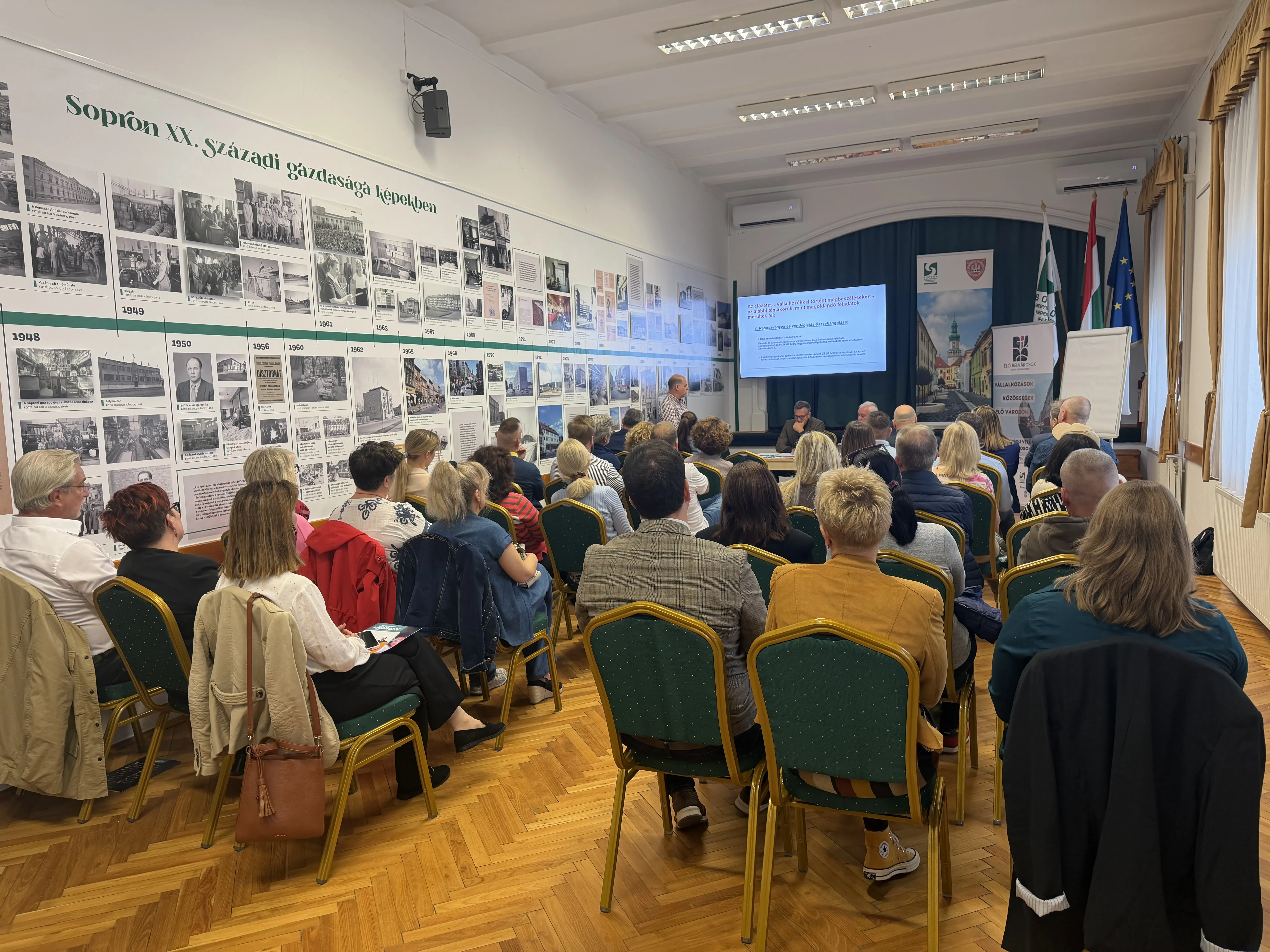
Photo: Sopron Chamber of Commerce and Industry
Four walks, four opportunities to rediscover the city center
Another important program element of the Living City 2.0 is the series of thematic entrepreneurial walks, which took place on four occasions in September and October.
The uniqueness of the walks is that, alongside traditional sightseeing, participants can visit local businesses that they would otherwise rarely get insights into.
The program simultaneously offers a cultural experience, personal encounters, and opportunities for downtown businesses to introduce themselves.
September: stories, crafts, and family traditions
The two walks in September related to the Cultural Heritage Days were fully booked.
The programs "Above the Roofs, Following the Masters" and "The Walls Tell Stories, Flavors Remember" connected Sopron's architectural heritage, its stories, and local entrepreneurial values.
During one walk, participants could peek behind the scenes of the Palatinus Hotel, where director Bálint Pethő showcased interesting aspects of the hotel's operation.
At the city history stations, signs, historical events, and lesser-known details of the past of Várkerület came to life under the guidance of Erika Taschner-Schmidt.
The program concluded at Hoffer Confectionery, where Gabriella Drávainé Schneider presented the history of the family business. The confectionery is celebrating its 90th anniversary this year, and the tradition of sweets-making is now carried on by the fourth generation.
Such encounters particularly well illustrate that the values of the historic city center live on not only in the buildings but also in businesses operating across generations, in professional knowledge, and in personal stories.
October 11: wine, fashion, and local entrepreneurial stories
The thematic walk on October 11 connected the exploration of historic streets with the presentation of two distinctly characterized businesses.
At Steigler Cellar, participants got to know the local wine culture through a wine tasting, while the owner of OMG Designer Store provided insights into the world of fashion and her own entrepreneurial experiences.
This time, Erika Taschner-Schmidt ensured the historical background as the tour guide.
The program demonstrated how the city's cultural heritage can be connected with contemporary entrepreneurial creativity and the diversity of the local economy.
October 18: Sips and Dice in Várkerület
The second walk in October took place under the title "Sips and Dice - Wine Culture and Board Games in Várkerület."
At the Tastevino Wine Bar & Vinothek, Szabolcs Lukács welcomed the group with sparkling wine and wine tasting, guiding participants through the world of local and international wine culture.
At KocKávézó, Krisztina Török showcased the community-building perspective of the family business through a playful quiz and homemade syrup.
The historical aspect of the walk was led by Dr. András Krisch.
The program was also a good example that downtown businesses do not only offer products or services, but also create community spaces and experiences that contribute to the attractiveness of a district.
The common value of the four walks is that visitors were not only able to view Sopron's city center from the outside but also personally meet those who keep it alive every day. The walks also provided businesses an opportunity to build connections with the audience through their own stories and activities.
Sopron and Budapest's experiences at a joint business breakfast
On October 20, Sopron was the guest at the BUM Business Breakfast. Entrepreneurs from Sopron joined online for the event held at Margaux Café, creating another opportunity for experience exchange between the cities.
The professional program highlighted the previous achievements and continuation of the Living City collaborations, as well as the local entrepreneurial collaboration, city challenges, and the possibilities of cooperation among various stakeholders.
Attila Antal, the CEO of BUM, presented how the previously initiated joint work in Sopron continues under the framework of Living City 2.0. The aim is not to uncritically adopt a Budapest model, but to apply the BUM's decade-long experience tailored to local conditions.
The meeting also confirmed that while individual districts and towns have different characteristics, entrepreneurial collaboration, joint marketing, and activating local communities can often address similar challenges.
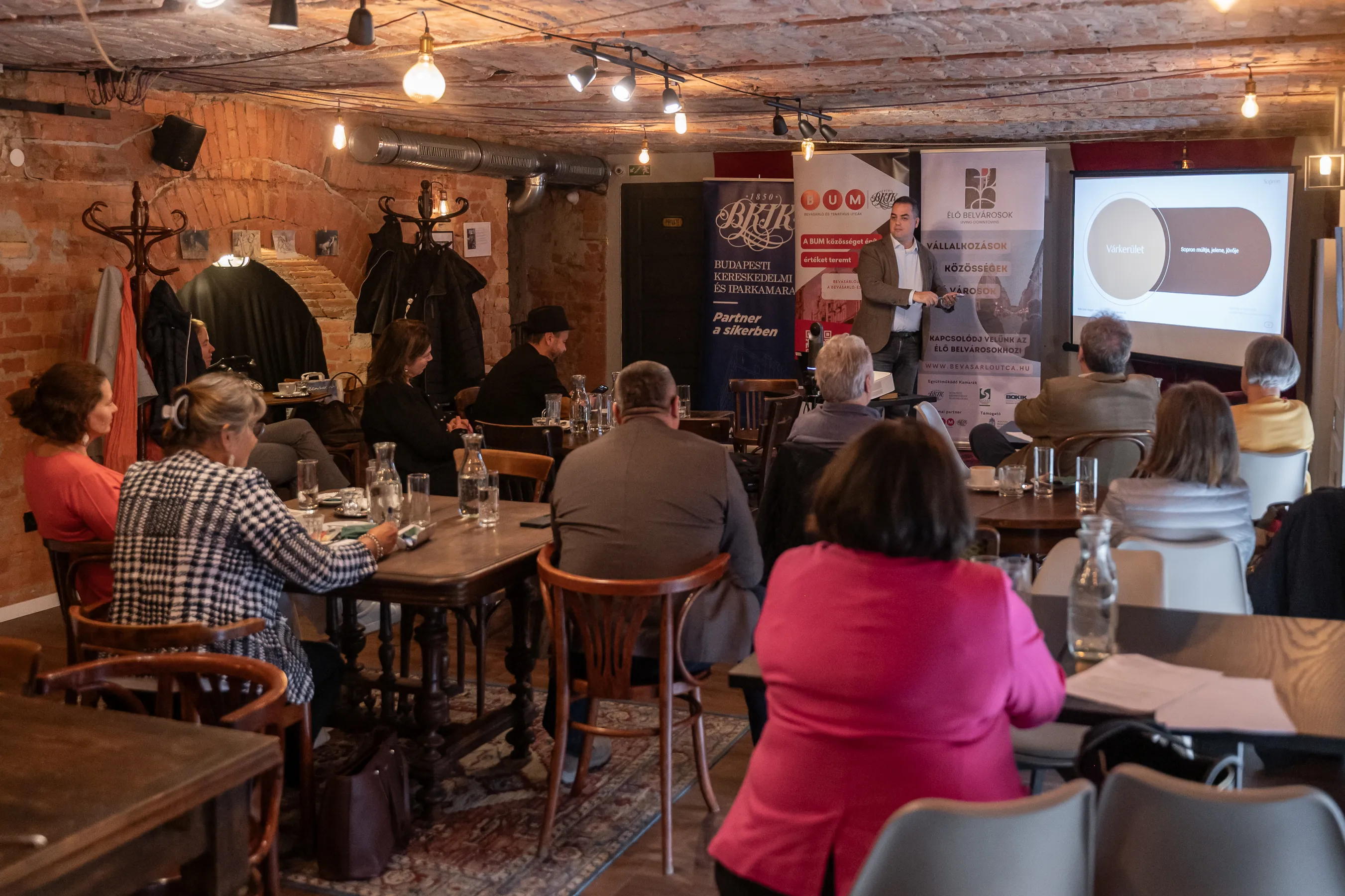
A detailed report was also prepared about the event:
Sopron Living Lab – the opinion of young people also matters
Alongside entrepreneurial dialogue and community programs, the Living Lab initiative, starting with the involvement of Sopron University, adds another important element to the shared thinking about the development of the city center.
The research, carried out with the participation of university students, aims to ensure that the perspectives of the local population, young people, and users of the city center are taken into account in shaping development concepts.
The combined evaluation of entrepreneurial experiences and residents' feedback can help ensure that future initiatives are based not only on assumptions but on real needs.
A separate article was written about the program:
Sopron Living Lab – students are researching how to make Sopron's city center even livelier
The next step: let collaborations emerge from connections
The first two months of Living City 2.0 have shown that there is a demand for joint thinking, personal meetings, and coordination of entrepreneurial initiatives in Sopron.
Entrepreneurial forums have provided opportunities to articulate common problems and engage in dialogue with city leadership. The thematic walks have presented downtown businesses in a new way, while the BUM Business Breakfast has contributed to strengthening professional relationships between cities.
One of the most important tasks in the upcoming period is to transform the discussions so far into concrete initiatives, joint programs, and long-term operational entrepreneurial connections.
For this, the local network of Sopron Chamber of Commerce and Industry and the professional-methodological experience of BUM provide important foundations.
The main goal of Living City 2.0 is not just to promote the city center but to strengthen an entrepreneurial community capable of thinking, initiating, and acting together for the future of Sopron.
The program is realized with the support of the Hungarian Chamber of Commerce and Industry.